Fishery Conservation Scientist Resume

As a Fishery Conservation Scientist, you will conduct comprehensive research on fish populations, habitats, and ecosystems to inform conservation efforts and management practices. Your work will involve analyzing data, monitoring fish stocks, and evaluating the impact of fishing activities on marine biodiversity. Collaboration is key in this role, as you will work closely with government agencies, conservation organizations, and local communities to develop and implement effective conservation strategies. You will also be responsible for communicating your findings through reports, presentations, and community outreach, ensuring that stakeholders are informed and engaged in sustainable practices.

0.0 (0 ratings)

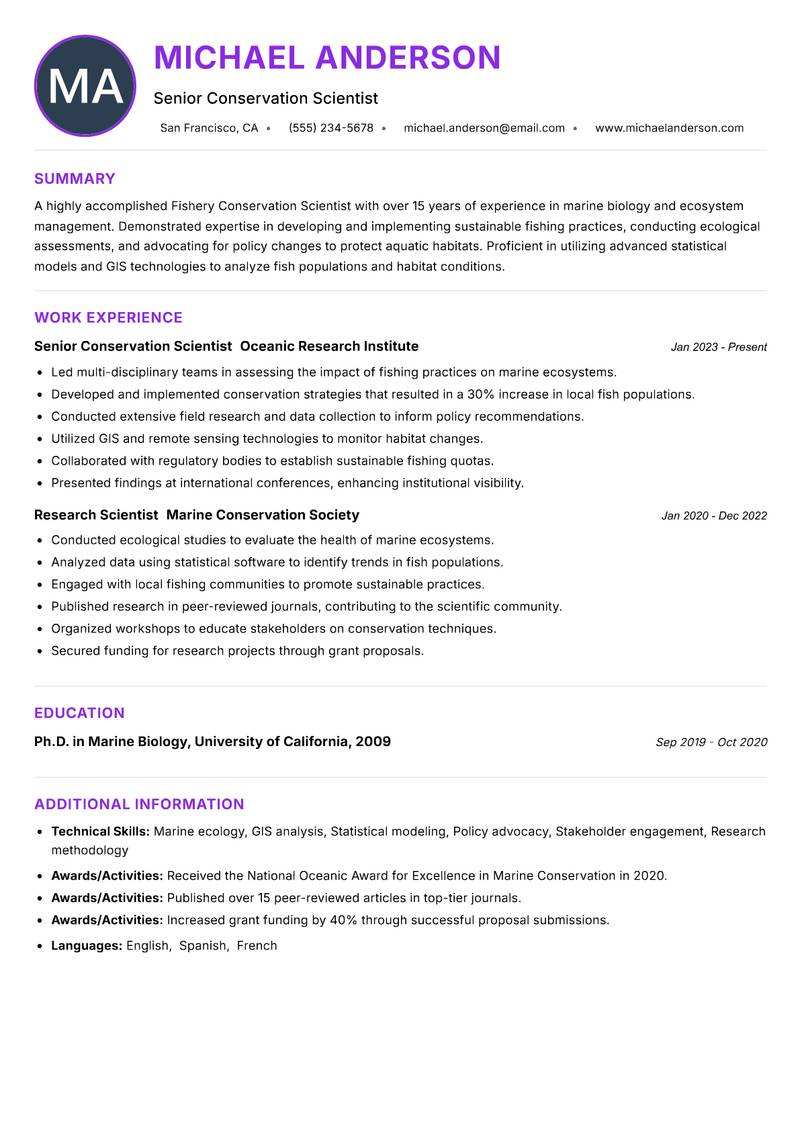
Senior Conservation Scientist Resume

A highly accomplished Fishery Conservation Scientist with over 15 years of experience in marine biology and ecosystem management. Demonstrated expertise in developing and implementing sustainable fishing practices, conducting ecological assessments, and advocating for policy changes to protect aquatic habitats. Proficient in utilizing advanced statistical models and GIS technologies to analyze fish populations and habitat conditions. Skilled in collaborating with governmental agencies, NGOs, and local communities to promote conservation initiatives. A recognized leader in the field, committed to advancing scientific understanding and fostering sustainable practices within the fishing industry. Proven ability to communicate complex scientific concepts to diverse audiences, ensuring informed decision-making and stakeholder engagement.

Marine ecology GIS analysis Statistical modeling Policy advocacy Stakeholder engagement Research methodology
  1. Led multi-disciplinary teams in assessing the impact of fishing practices on marine ecosystems.
  2. Developed and implemented conservation strategies that resulted in a 30% increase in local fish populations.
  3. Conducted extensive field research and data collection to inform policy recommendations.
  4. Utilized GIS and remote sensing technologies to monitor habitat changes.
  5. Collaborated with regulatory bodies to establish sustainable fishing quotas.
  6. Presented findings at international conferences, enhancing institutional visibility.
  1. Conducted ecological studies to evaluate the health of marine ecosystems.
  2. Analyzed data using statistical software to identify trends in fish populations.
  3. Engaged with local fishing communities to promote sustainable practices.
  4. Published research in peer-reviewed journals, contributing to the scientific community.
  5. Organized workshops to educate stakeholders on conservation techniques.
  6. Secured funding for research projects through grant proposals.

Achievements

  • Received the National Oceanic Award for Excellence in Marine Conservation in 2020.
  • Published over 15 peer-reviewed articles in top-tier journals.
  • Increased grant funding by 40% through successful proposal submissions.
⏱️
Experience
2-5 Years
📅
Level
Mid Level
🎓
Education
Ph.D. in Marine Biology, Unive...

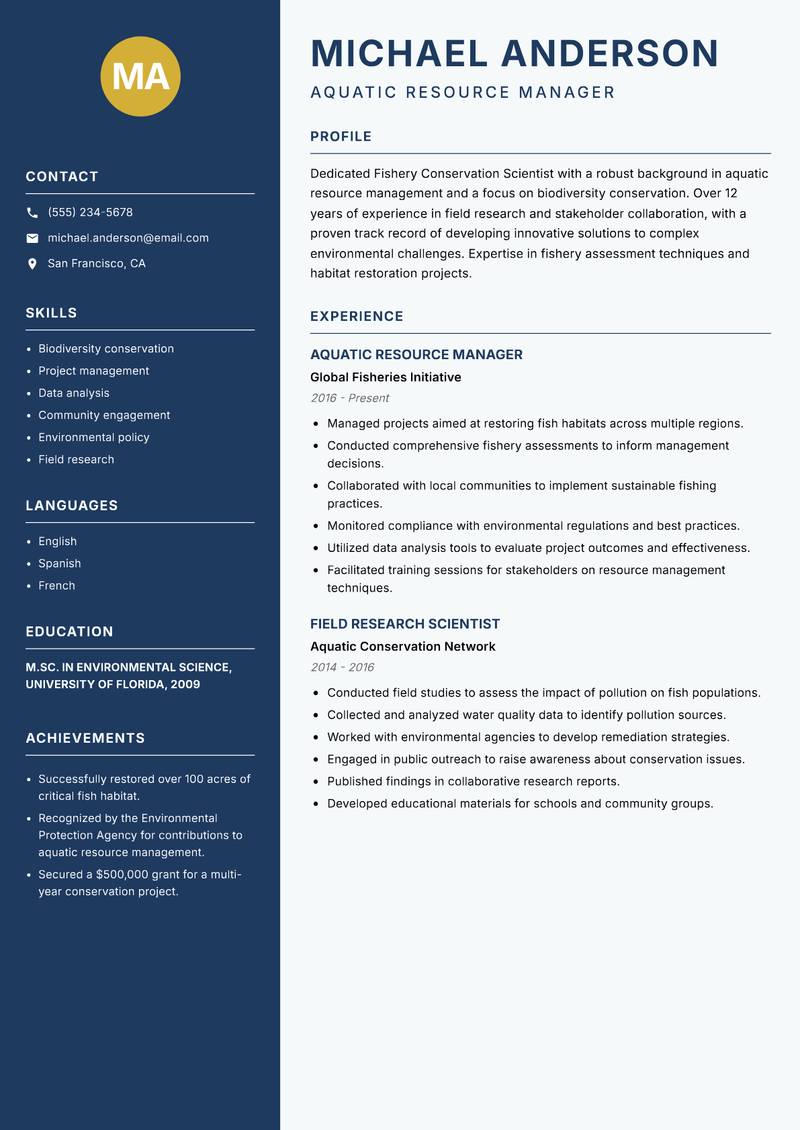
Aquatic Resource Manager Resume

Dedicated Fishery Conservation Scientist with a robust background in aquatic resource management and a focus on biodiversity conservation. Over 12 years of experience in field research and stakeholder collaboration, with a proven track record of developing innovative solutions to complex environmental challenges. Expertise in fishery assessment techniques and habitat restoration projects. Strong analytical skills complemented by extensive knowledge of environmental regulations and sustainable practices. Committed to fostering partnerships between governmental agencies, industry stakeholders, and conservation organizations to ensure the long-term viability of aquatic ecosystems. A proactive communicator adept at translating scientific data into actionable conservation strategies.

Biodiversity conservation Project management Data analysis Community engagement Environmental policy Field research
  1. Managed projects aimed at restoring fish habitats across multiple regions.
  2. Conducted comprehensive fishery assessments to inform management decisions.
  3. Collaborated with local communities to implement sustainable fishing practices.
  4. Monitored compliance with environmental regulations and best practices.
  5. Utilized data analysis tools to evaluate project outcomes and effectiveness.
  6. Facilitated training sessions for stakeholders on resource management techniques.
  1. Conducted field studies to assess the impact of pollution on fish populations.
  2. Collected and analyzed water quality data to identify pollution sources.
  3. Worked with environmental agencies to develop remediation strategies.
  4. Engaged in public outreach to raise awareness about conservation issues.
  5. Published findings in collaborative research reports.
  6. Developed educational materials for schools and community groups.

Achievements

  • Successfully restored over 100 acres of critical fish habitat.
  • Recognized by the Environmental Protection Agency for contributions to aquatic resource management.
  • Secured a $500,000 grant for a multi-year conservation project.
⏱️
Experience
2-5 Years
📅
Level
Mid Level
🎓
Education
M.Sc. in Environmental Science...

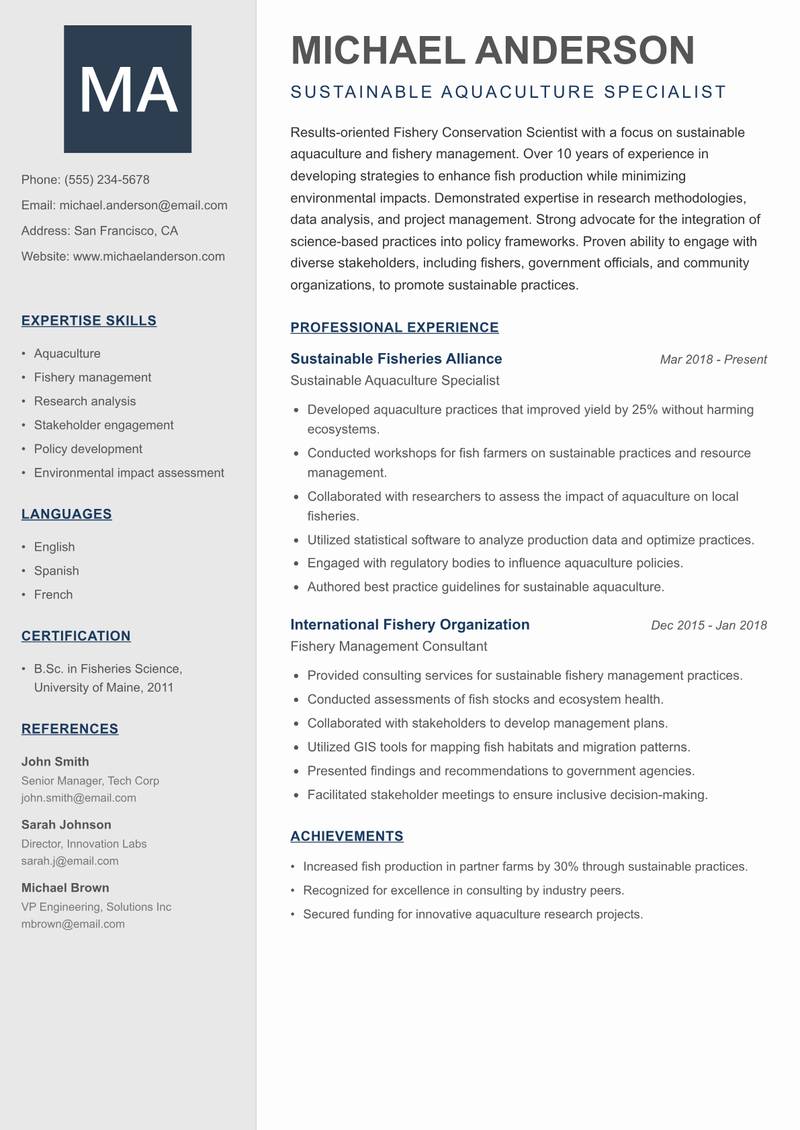
Sustainable Aquaculture Specialist Resume

Results-oriented Fishery Conservation Scientist with a focus on sustainable aquaculture and fishery management. Over 10 years of experience in developing strategies to enhance fish production while minimizing environmental impacts. Demonstrated expertise in research methodologies, data analysis, and project management. Strong advocate for the integration of science-based practices into policy frameworks. Proven ability to engage with diverse stakeholders, including fishers, government officials, and community organizations, to promote sustainable practices. Committed to fostering innovation in aquaculture to meet the growing global demand for fish while ensuring ecosystem health.

Aquaculture Fishery management Research analysis Stakeholder engagement Policy development Environmental impact assessment
  1. Developed aquaculture practices that improved yield by 25% without harming ecosystems.
  2. Conducted workshops for fish farmers on sustainable practices and resource management.
  3. Collaborated with researchers to assess the impact of aquaculture on local fisheries.
  4. Utilized statistical software to analyze production data and optimize practices.
  5. Engaged with regulatory bodies to influence aquaculture policies.
  6. Authored best practice guidelines for sustainable aquaculture.
  1. Provided consulting services for sustainable fishery management practices.
  2. Conducted assessments of fish stocks and ecosystem health.
  3. Collaborated with stakeholders to develop management plans.
  4. Utilized GIS tools for mapping fish habitats and migration patterns.
  5. Presented findings and recommendations to government agencies.
  6. Facilitated stakeholder meetings to ensure inclusive decision-making.

Achievements

  • Increased fish production in partner farms by 30% through sustainable practices.
  • Recognized for excellence in consulting by industry peers.
  • Secured funding for innovative aquaculture research projects.
⏱️
Experience
2-5 Years
📅
Level
Mid Level
🎓
Education
B.Sc. in Fisheries Science, Un...

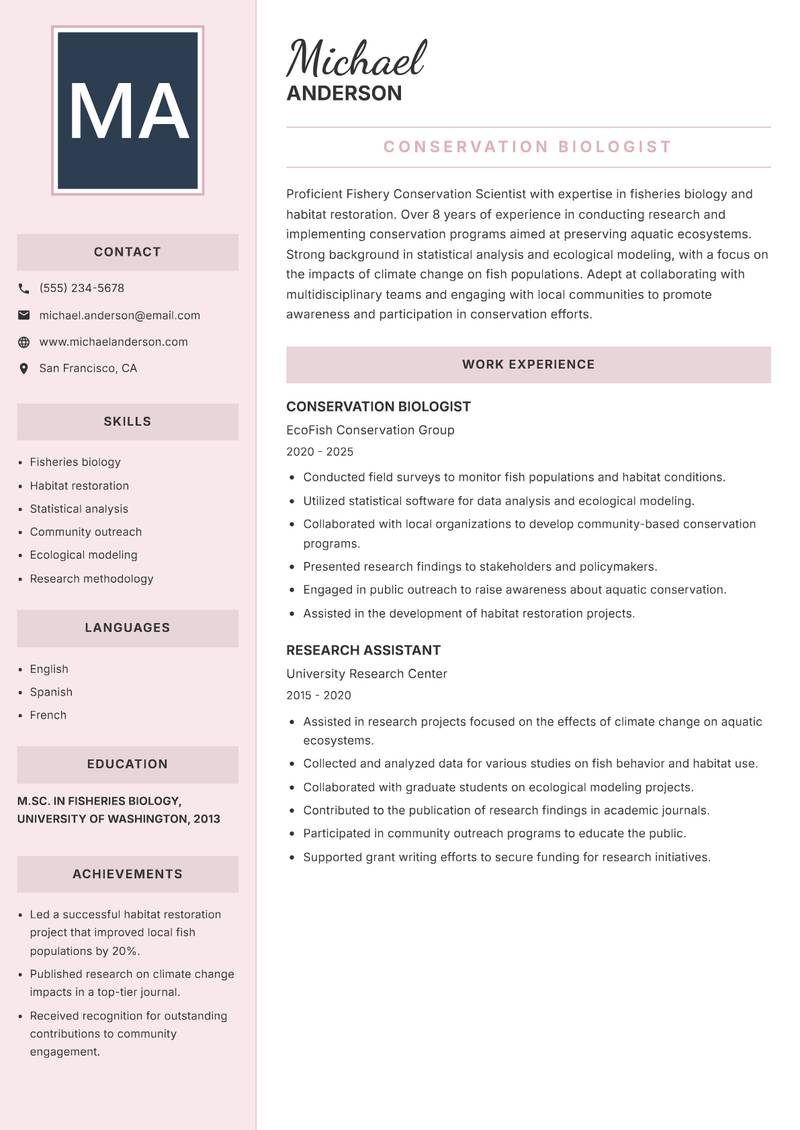
Conservation Biologist Resume

Proficient Fishery Conservation Scientist with expertise in fisheries biology and habitat restoration. Over 8 years of experience in conducting research and implementing conservation programs aimed at preserving aquatic ecosystems. Strong background in statistical analysis and ecological modeling, with a focus on the impacts of climate change on fish populations. Adept at collaborating with multidisciplinary teams and engaging with local communities to promote awareness and participation in conservation efforts. Recognized for the ability to translate scientific findings into practical solutions for fishery management and habitat restoration initiatives. Committed to driving change through innovative research and community engagement.

Fisheries biology Habitat restoration Statistical analysis Community outreach Ecological modeling Research methodology
  1. Conducted field surveys to monitor fish populations and habitat conditions.
  2. Utilized statistical software for data analysis and ecological modeling.
  3. Collaborated with local organizations to develop community-based conservation programs.
  4. Presented research findings to stakeholders and policymakers.
  5. Engaged in public outreach to raise awareness about aquatic conservation.
  6. Assisted in the development of habitat restoration projects.
  1. Assisted in research projects focused on the effects of climate change on aquatic ecosystems.
  2. Collected and analyzed data for various studies on fish behavior and habitat use.
  3. Collaborated with graduate students on ecological modeling projects.
  4. Contributed to the publication of research findings in academic journals.
  5. Participated in community outreach programs to educate the public.
  6. Supported grant writing efforts to secure funding for research initiatives.

Achievements

  • Led a successful habitat restoration project that improved local fish populations by 20%.
  • Published research on climate change impacts in a top-tier journal.
  • Received recognition for outstanding contributions to community engagement.
⏱️
Experience
2-5 Years
📅
Level
Mid Level
🎓
Education
M.Sc. in Fisheries Biology, Un...

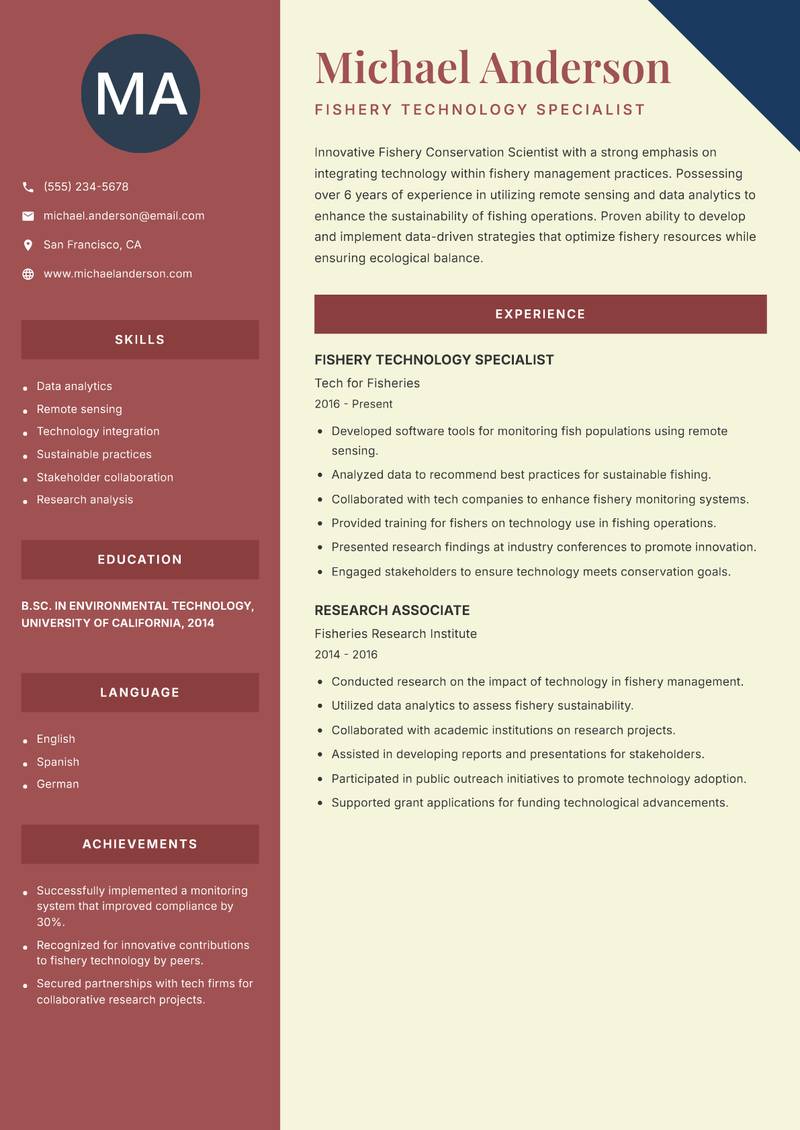
Fishery Technology Specialist Resume

Innovative Fishery Conservation Scientist with a strong emphasis on integrating technology within fishery management practices. Possessing over 6 years of experience in utilizing remote sensing and data analytics to enhance the sustainability of fishing operations. Proven ability to develop and implement data-driven strategies that optimize fishery resources while ensuring ecological balance. Committed to advancing the use of technology in conservation efforts through research and stakeholder collaboration. A dynamic communicator skilled in presenting complex data in accessible formats for diverse audiences. Passionate about fostering partnerships that promote sustainable fisheries and safeguard marine biodiversity.

Data analytics Remote sensing Technology integration Sustainable practices Stakeholder collaboration Research analysis
  1. Developed software tools for monitoring fish populations using remote sensing.
  2. Analyzed data to recommend best practices for sustainable fishing.
  3. Collaborated with tech companies to enhance fishery monitoring systems.
  4. Provided training for fishers on technology use in fishing operations.
  5. Presented research findings at industry conferences to promote innovation.
  6. Engaged stakeholders to ensure technology meets conservation goals.
  1. Conducted research on the impact of technology in fishery management.
  2. Utilized data analytics to assess fishery sustainability.
  3. Collaborated with academic institutions on research projects.
  4. Assisted in developing reports and presentations for stakeholders.
  5. Participated in public outreach initiatives to promote technology adoption.
  6. Supported grant applications for funding technological advancements.

Achievements

  • Successfully implemented a monitoring system that improved compliance by 30%.
  • Recognized for innovative contributions to fishery technology by peers.
  • Secured partnerships with tech firms for collaborative research projects.
⏱️
Experience
2-5 Years
📅
Level
Mid Level
🎓
Education
B.Sc. in Environmental Technol...

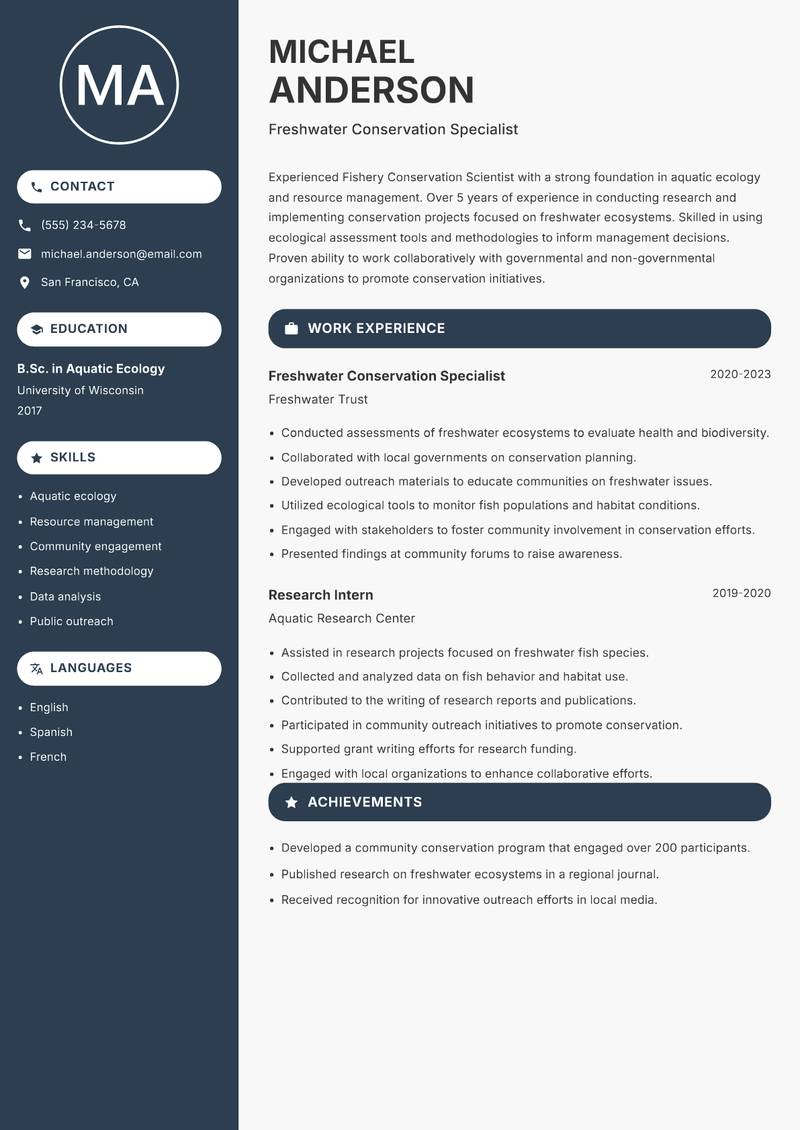
Freshwater Conservation Specialist Resume

Experienced Fishery Conservation Scientist with a strong foundation in aquatic ecology and resource management. Over 5 years of experience in conducting research and implementing conservation projects focused on freshwater ecosystems. Skilled in using ecological assessment tools and methodologies to inform management decisions. Proven ability to work collaboratively with governmental and non-governmental organizations to promote conservation initiatives. Committed to advancing knowledge in the field of freshwater fisheries through research and public engagement. A proactive advocate for sustainable practices that protect aquatic resources and enhance biodiversity.

Aquatic ecology Resource management Community engagement Research methodology Data analysis Public outreach
  1. Conducted assessments of freshwater ecosystems to evaluate health and biodiversity.
  2. Collaborated with local governments on conservation planning.
  3. Developed outreach materials to educate communities on freshwater issues.
  4. Utilized ecological tools to monitor fish populations and habitat conditions.
  5. Engaged with stakeholders to foster community involvement in conservation efforts.
  6. Presented findings at community forums to raise awareness.
  1. Assisted in research projects focused on freshwater fish species.
  2. Collected and analyzed data on fish behavior and habitat use.
  3. Contributed to the writing of research reports and publications.
  4. Participated in community outreach initiatives to promote conservation.
  5. Supported grant writing efforts for research funding.
  6. Engaged with local organizations to enhance collaborative efforts.

Achievements

  • Developed a community conservation program that engaged over 200 participants.
  • Published research on freshwater ecosystems in a regional journal.
  • Received recognition for innovative outreach efforts in local media.
⏱️
Experience
2-5 Years
📅
Level
Mid Level
🎓
Education
B.Sc. in Aquatic Ecology, Univ...

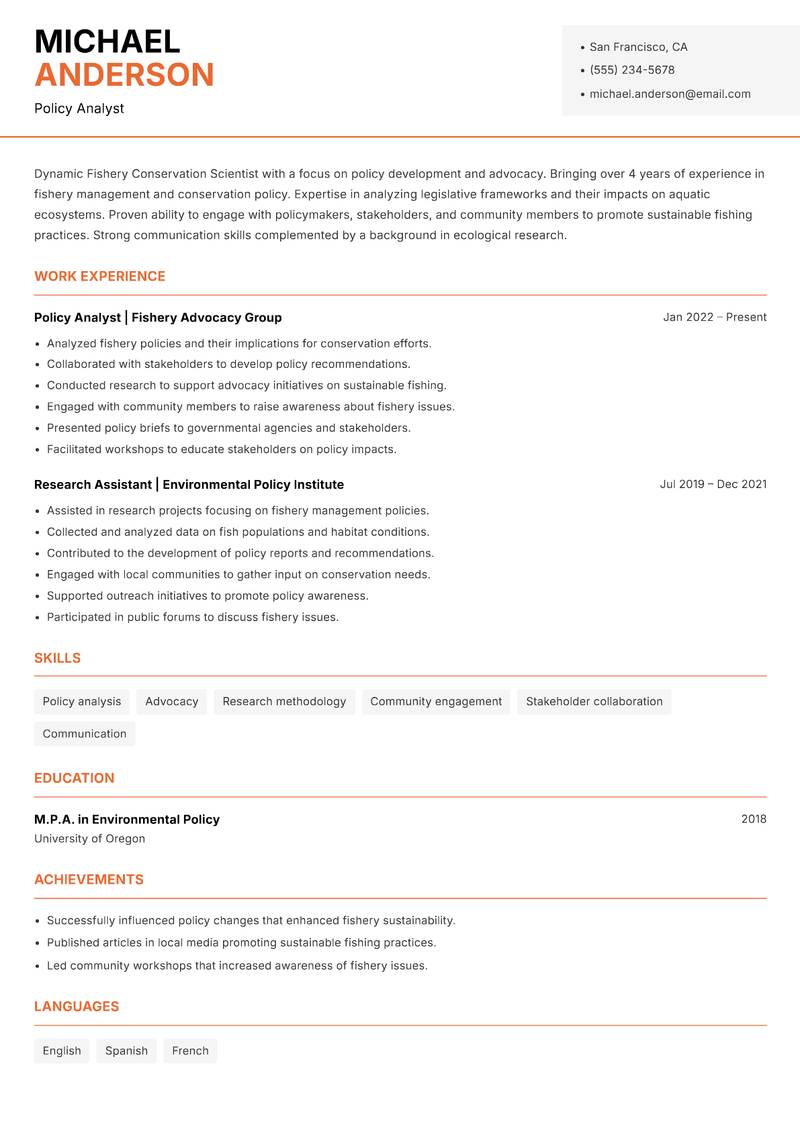
Policy Analyst Resume

Dynamic Fishery Conservation Scientist with a focus on policy development and advocacy. Bringing over 4 years of experience in fishery management and conservation policy. Expertise in analyzing legislative frameworks and their impacts on aquatic ecosystems. Proven ability to engage with policymakers, stakeholders, and community members to promote sustainable fishing practices. Strong communication skills complemented by a background in ecological research. Committed to fostering collaborative approaches that enhance the resilience of fish populations and habitats. Passionate about driving policy changes that support conservation goals and sustainable fisheries.

Policy analysis Advocacy Research methodology Community engagement Stakeholder collaboration Communication
  1. Analyzed fishery policies and their implications for conservation efforts.
  2. Collaborated with stakeholders to develop policy recommendations.
  3. Conducted research to support advocacy initiatives on sustainable fishing.
  4. Engaged with community members to raise awareness about fishery issues.
  5. Presented policy briefs to governmental agencies and stakeholders.
  6. Facilitated workshops to educate stakeholders on policy impacts.
  1. Assisted in research projects focusing on fishery management policies.
  2. Collected and analyzed data on fish populations and habitat conditions.
  3. Contributed to the development of policy reports and recommendations.
  4. Engaged with local communities to gather input on conservation needs.
  5. Supported outreach initiatives to promote policy awareness.
  6. Participated in public forums to discuss fishery issues.

Achievements

  • Successfully influenced policy changes that enhanced fishery sustainability.
  • Published articles in local media promoting sustainable fishing practices.
  • Led community workshops that increased awareness of fishery issues.
⏱️
Experience
2-5 Years
📅
Level
Mid Level
🎓
Education
M.P.A. in Environmental Policy...

Key Skills for Fishery Conservation Scientist Positions

Successful fishery conservation scientist professionals typically possess a combination of technical expertise, soft skills, and industry knowledge. Common skills include problem-solving abilities, attention to detail, communication skills, and proficiency in relevant tools and technologies specific to the role.

Typical Responsibilities

Fishery Conservation Scientist roles often involve a range of responsibilities that may include project management, collaboration with cross-functional teams, meeting deadlines, maintaining quality standards, and contributing to organizational goals. Specific duties vary by company and seniority level.

Resume Tips for Fishery Conservation Scientist Applications

ATS Optimization

Applicant Tracking Systems (ATS) scan resumes for keywords and formatting. To optimize your fishery conservation scientist resume for ATS:

Frequently Asked Questions

How do I customize this fishery conservation scientist resume template?

You can customize this resume template by replacing the placeholder content with your own information. Update the professional summary, work experience, education, and skills sections to match your background. Ensure all dates, company names, and achievements are accurate and relevant to your career history.

Is this fishery conservation scientist resume template ATS-friendly?

Yes, this resume template is designed to be ATS-friendly. It uses standard section headings, clear formatting, and avoids complex graphics or tables that can confuse applicant tracking systems. The structure follows best practices for ATS compatibility, making it easier for your resume to be parsed correctly by automated systems.

What is the ideal length for a fishery conservation scientist resume?

For most fishery conservation scientist positions, a one to two-page resume is ideal. Entry-level candidates should aim for one page, while experienced professionals with extensive work history may use two pages. Focus on the most relevant and recent experience, and ensure every section adds value to your application.

How should I format my fishery conservation scientist resume for best results?

Use a clean, professional format with consistent fonts and spacing. Include standard sections such as Contact Information, Professional Summary, Work Experience, Education, and Skills. Use bullet points for easy scanning, and ensure your contact information is clearly visible at the top. Save your resume as a PDF to preserve formatting across different devices and systems.

Can I use this template for different fishery conservation scientist job applications?

Yes, you can use this template as a base for multiple applications. However, it's recommended to tailor your resume for each specific job posting. Review the job description carefully and incorporate relevant keywords, skills, and experiences that match the requirements. Customizing your resume for each application increases your chances of passing ATS filters and catching the attention of hiring managers.

Scroll to view samples